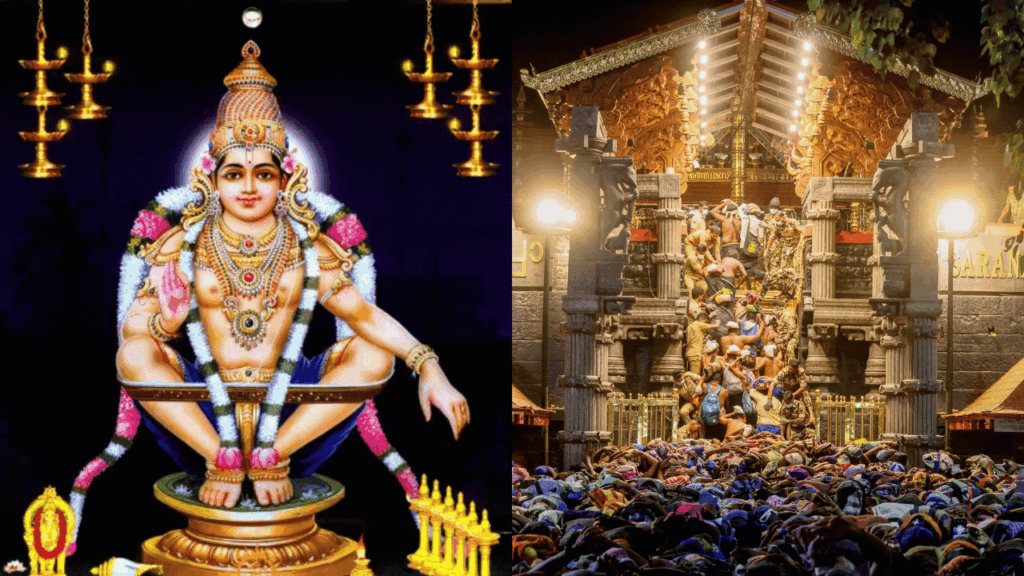
Mandala Pooja and Makaravilakku are among the most spiritually significant and widely observed festivals in Idukki, deeply connected to the worship of Lord Ayyappa. Celebrated during November to January, these sacred observances create a powerful devotional atmosphere across the district, as Idukki lies close to Sabarimala, one of the most important pilgrimage centers in India.
Mandala Pooja
Mandala Pooja marks the conclusion of the 41-day Mandala Vratham, a period of strict spiritual discipline followed by Ayyappa devotees. During this time, devotees observe celibacy, simplicity, vegetarian food, and daily prayers. Ayyappa temples throughout Idukki conduct special poojas, bhajans, and evening rituals, drawing large numbers of worshippers from nearby towns and villages. The festival emphasizes self-discipline, devotion, and equality, core principles of Lord Ayyappa worship.
Makaravilakku
Following Mandala Pooja, Makaravilakku is celebrated in mid-January during the Malayalam month of Makaram. The appearance of the sacred Makara Jyothi (celestial light) on the hill near Sabarimala is the most awaited moment of the festival. Devotees from Idukki actively participate by undertaking pilgrimages, organizing devotional gatherings, and conducting special temple rituals. The event symbolizes divine presence, faith, and spiritual fulfillment.
Significance in Idukki
In Idukki, Mandala Pooja and Makaravilakku are more than festivals—they are deep spiritual journeys. Roads, towns, and temples resonate with chants of “Swamiye Saranam Ayyappa,” and communities come together to support pilgrims with food, rest, and prayers. These festivals highlight Idukki’s strong spiritual culture, community harmony, and its close connection to one of Kerala’s most revered religious traditions.
Together, Mandala Pooja and Makaravilakku stand as powerful symbols of devotion, discipline, and faith, making them among the grandest spiritual celebrations in Idukki.